Inspect the substrate
Identify deterioration, moisture issues and necessary repairs.
Exterior decorating of appropriate timber, masonry and architectural details for distinctive homes and traditional properties.
Image: Substantial Victorian stone home with prominent bay windows, painted timber details and a landscaped entrance. Representative photography; not a MAR Decor project.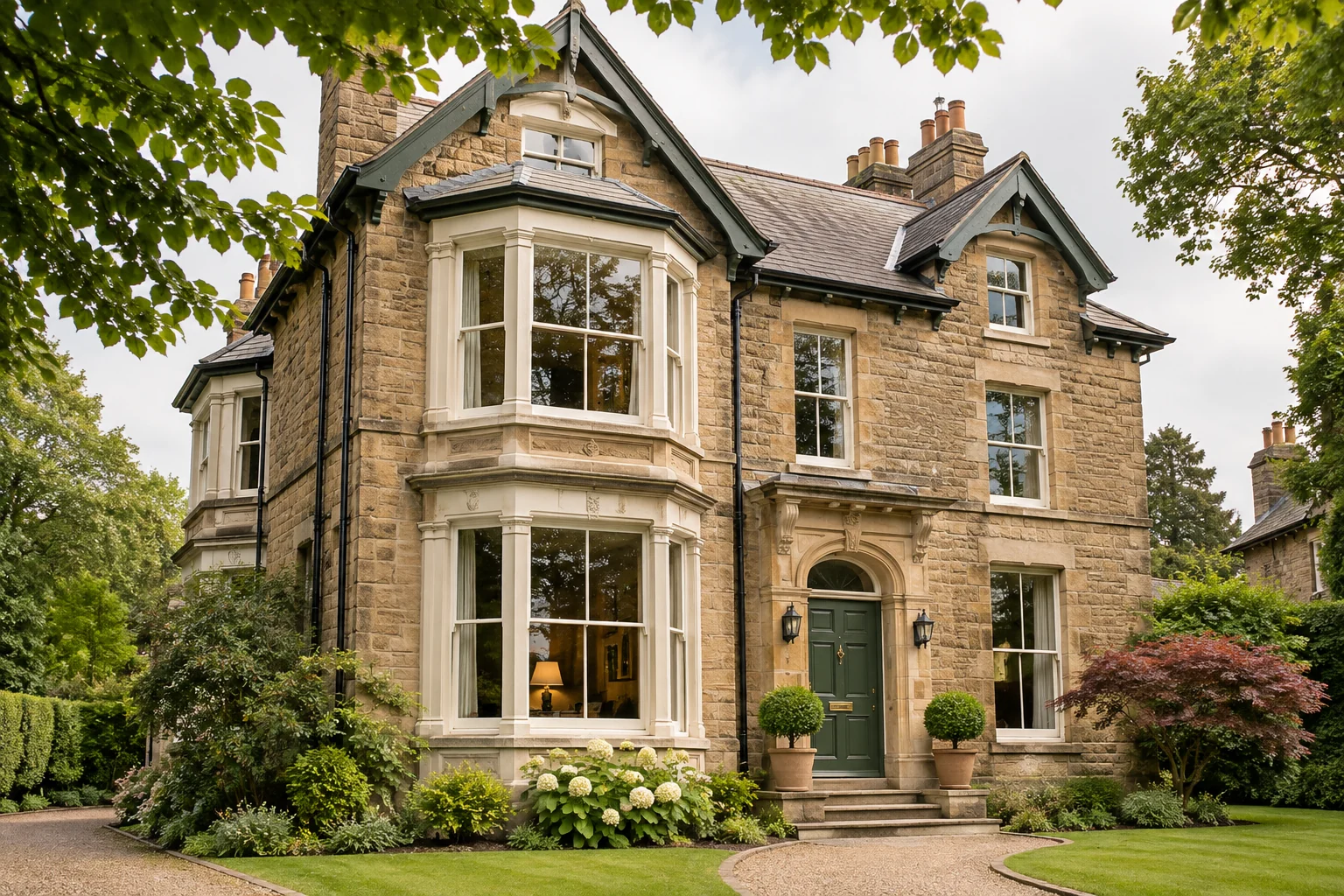 Substantial Victorian stone home with prominent bay windows, painted timber details and a landscaped entrance.
External coatings play a practical role in protecting suitable surfaces from the weather, as well as defining a building's visual character. Good preparation and the right coating specification are essential.
We assess the property and existing finish before recommending the scope of work. Historic materials, specialist repairs or listed-building constraints may require further professional guidance.
Our approachIdentify deterioration, moisture issues and necessary repairs.
Match coatings to the substrate and exposure conditions.
Plan access, conditions and sequencing around the specification.
Doors, frames and other accessible timber features, assessed for condition.
Selected masonry and decorative features where a suitable coating is appropriate.
Exterior painting for distinctive homes, timber joinery and traditional properties, with attention to preparation, weather and appropriate coatings.
Exterior decorating combines appearance with protection. Wind-driven rain, sunlight, movement in timber and previous coating failures can all affect the performance of a painted surface. The correct specification begins with the condition of the material beneath the paint and any repairs that must be addressed first, rather than choosing a colour and applying a new coat over a problem.
For substantial houses and older properties, exterior elements can include sash windows, fascia boards, timber doors, porch details, metal features, masonry and decorative mouldings. Each may call for a different preparation method, primer and finish, particularly where access is restricted or surfaces are exposed.
Old timber often needs careful assessment around joints, end grain and lower rails where moisture may collect. Loose paint and failed sealants can expose the surface to further damage; painting over these defects will not provide a lasting solution. We discuss sound preparation and any separate joinery repairs so the decorative finish has a suitable base.
Traditional door colours and crisp detailing can dramatically change the appearance of a frontage. The final sheen should suit the design and expected wear, with appropriate attention given to handles, hinges, glazing and neighbouring surfaces during work.
Masonry coatings are not interchangeable. The existing paint, the building’s construction and its moisture behaviour all influence what is suitable. On older breathable walls, applying the wrong product can create problems, so uncertain surfaces deserve additional assessment and, where needed, specialist advice.
Exterior work also depends on safe access and a suitable weather window. We discuss scaffolding or access equipment where required, and take account of drying and curing conditions. A realistic programme should avoid promising a fixed finish date regardless of the weather.
Potentially, subject to the timber condition, access and scope. Repairs and coating compatibility need to be established before giving a complete specification.
An appropriate treatment depends on the existing material and moisture movement. We would not automatically specify standard masonry paint for a sensitive historic surface.
Access requirements can be discussed during the quotation. Any scaffolding or specialist equipment must be specified and agreed for the individual job.
Tell us about your property, your plans and the finish you are hoping to achieve. We would be pleased to discuss the details.