Understand existing surfaces
Assess earlier coatings and identify areas needing repair or specialist input.
Thoughtful decorative work for Georgian, Victorian, Edwardian and other character properties, respecting the details that make them special.
Image: Fine interior painting showcased through detailed wall panelling, crisp white woodwork and a traditional staircase. Representative photography; not a MAR Decor project.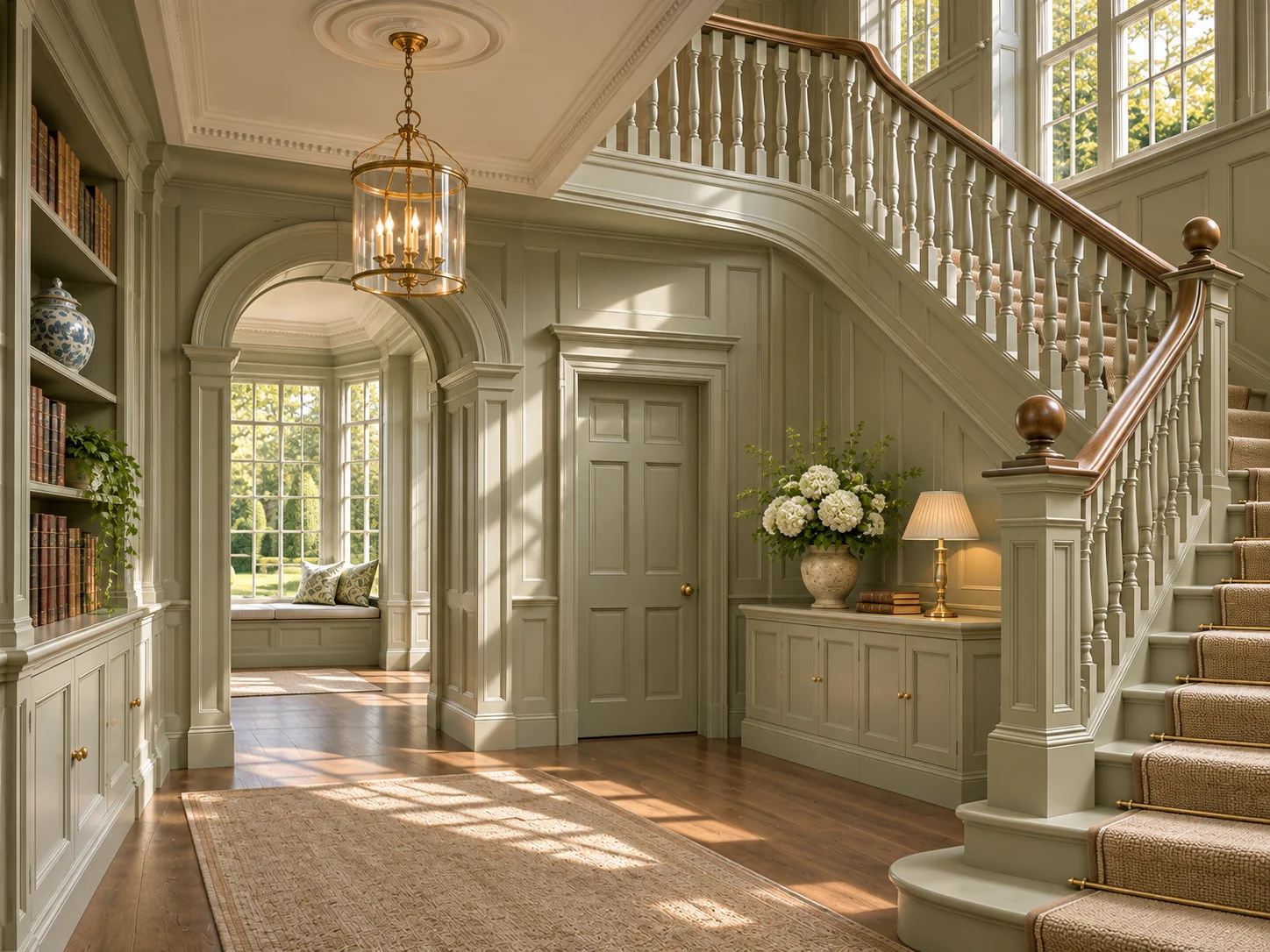 Fine interior painting showcased through detailed wall panelling, crisp white woodwork and a traditional staircase.
Period properties can feature traditional joinery, ornate cornices, layered finishes and delicate surfaces. Thorough assessment helps determine the right preparation and decorative approach.
We discuss colour, sheen, existing materials and decorative details with the client before work begins. Listed status or specialist conservation needs may require professional advice and applicable approvals.
Our approachAssess earlier coatings and identify areas needing repair or specialist input.
Treat original details respectfully and avoid unnecessary intervention.
Agree sample colours, sheen levels and room sequencing before applying final coats.
Elegant panelling, doors, sash windows, cornices and fine trim.
Considered options for walls and woodwork, chosen according to substrate and the desired appearance.
Sensitive painting and decorating for Georgian, Victorian, Edwardian and character homes. Thoughtful preparation, woodwork and finishes from MAR Decor.
A Georgian townhouse, a Victorian villa and an older stone farmhouse can have very different construction and decorative histories. Original plaster, later repairs, timber movement and multiple generations of paint may all be visible within a single room. The right starting point is a careful look at the existing condition, including signs of damp, failed coatings and previous repairs, before recommending a new specification.
Decorating cannot resolve a continuing moisture problem or unstable substrate on its own. Where defects suggest that a separate building repair is needed, that should be understood before applying a decorative finish. This protects the appearance of the project and helps avoid masking a problem that is likely to return.
Traditional details give period interiors their character. Cornices, ceiling roses, picture rails, panelled doors, sash windows and decorative architraves can be visually diminished by careless preparation or excessive paint build-up. A sensitive decorative approach considers those profiles, the extent of existing damage and how the finish should meet adjoining surfaces.
Careful work around fine edges, old timber and uneven plaster often takes longer than decoration in a modern, uniform room. That is why an individual quotation should explain the preparation expected rather than promising the same treatment and price for every property type.
Colour selection can honour a building’s period without turning it into a museum. Muted greens, traditional neutrals, deep blues, warm whites and modern contrasting shades can all work when chosen in relation to the light, proportions and existing fabric. The most appropriate paint chemistry is a separate decision: appearance, breathability, adhesion and durability may not always point to the same product.
For listed buildings and especially sensitive historic surfaces, permissions and conservation advice may be required before altering finishes. We do not describe ordinary decorative painting as conservation treatment; where specialist input is necessary, it should be sought and included in the project plan.
Not automatically. The appropriate system depends on the construction, surface history and moisture behaviour. Traditional or vulnerable materials should be assessed before specifying modern impermeable coatings.
Timber joinery can form part of a suitable decorative scope. Condition, existing coatings, repairs and access should be reviewed before deciding on the work.
Some changes may require consent depending on the building and the work proposed. Owners should confirm requirements with the relevant conservation authority before work that could affect protected character.
Tell us about your property, your plans and the finish you are hoping to achieve. We would be pleased to discuss the details.