
Discuss & understand
We begin with a conversation about the building, your goals, preferred colours and finishes, timescale and any access or occupancy constraints.
A practical, well-considered process for residential and commercial decorating, with the property and people at the centre.
Image: Architectural woodwork with crisp painted mouldings, decorative panelling and carefully finished doors. Representative photography; not a MAR Decor project.We begin with a conversation about the building, your goals, preferred colours and finishes, timescale and any access or occupancy constraints.
Review condition, existing treatments, repairs and areas needing specialist advice or separate scope.
Agree the specification and sequence of work. Protect relevant floors, furnishings, features and surrounding surfaces before decoration begins.
Carry out appropriate filling, smoothing, priming and finishing work with attention to clean edges, coverage and consistency.
Inspect the finished space, address any agreed final touches and explain relevant care considerations.
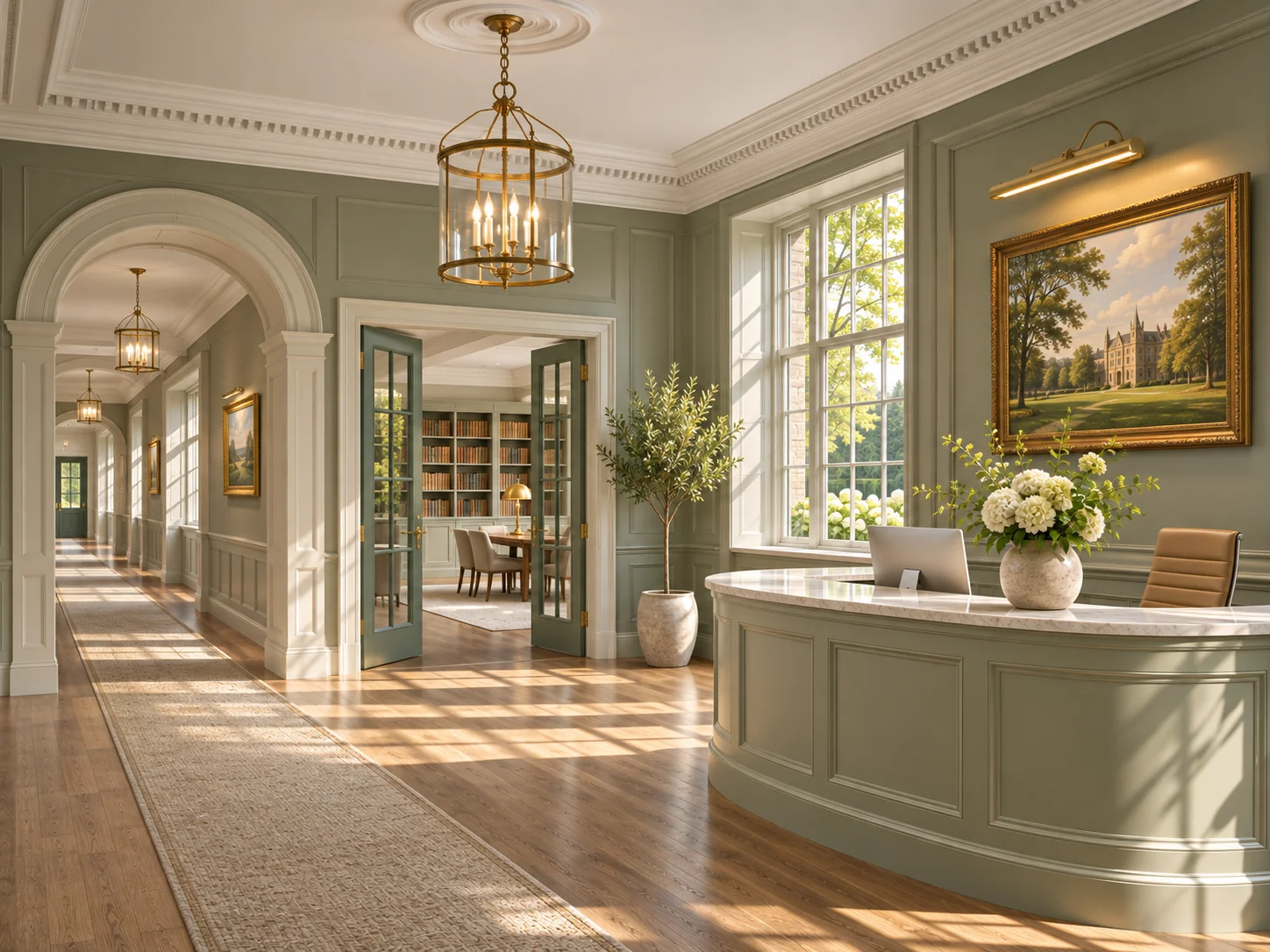 Architectural woodwork with crisp painted mouldings, decorative panelling and carefully finished doors.
Paint and wallcovering selection is about more than colour. The existing substrate, level of use, desired sheen and maintenance expectations all influence the specification.
We can discuss products from established decorative and trade ranges where appropriate, without implying manufacturer endorsement or an exclusive partnership.
Explore our workHow MAR Decor approaches premium residential and commercial painting: consultation, assessment, surface preparation, materials, protection and handover.
An accurate decorating quotation begins with a clear brief. We encourage clients to describe the property or premises, the areas to be decorated, the condition of existing surfaces and the finish they want to achieve. Photographs and measurements can help at an early stage, but a detailed or unusual project may also need a site assessment before a firm specification can be prepared.
Questions about occupied rooms, access equipment, furniture, other trades and deadlines are not administrative extras; they affect how the work should be planned. A formal drawing room with delicate fittings requires a different setup from an empty commercial unit, even where the painted area is similar.
Preparation can involve cleaning, removing loose coatings, filling, sanding, caulking appropriate joints, spot-priming and addressing defects identified in the agreed scope. The method depends on the substrate and product. It is important to distinguish routine preparation from plastering, damp repairs, joinery replacement or other building work that may need a separate specification.
Where woodwork has multiple existing coats, or an older wall has an uncertain finish, the correct approach may need additional thought. A careful decorating programme allows time for that work instead of assuming every surface will be ready for its final coat immediately.
Colours, levels of sheen, washing requirements and the appearance of surrounding finishes should be reviewed together. Product compatibility matters just as much as the final look. Certain historic materials require specialist consideration, while hard-used commercial surfaces may prioritise durability and cleaning.
If the client or interior designer has specified a particular brand or system, we can discuss the product requirements and whether the proposed substrate and preparation are suitable. If there are technical uncertainties, they should be resolved before installation rather than concealed in a generic allowance.
A decorative project should end with a review of the agreed areas, attention to reasonable snagging and a clear understanding of any remaining curing or care considerations. Fresh paint is often touch-dry before it has fully achieved the hardness or washability described by the manufacturer, so early treatment can matter.
On larger jobs, room-by-room sign-off can help everyone understand what is complete. We prefer the scope, exclusions and handover arrangements to be recorded clearly so expectations remain aligned throughout the project.
The quotation should say what preparation is included. Extensive repairs, hidden defects or work outside the agreed scope would need discussion rather than being silently assumed.
Potentially, subject to reviewing product suitability, quantities and the manufacturer’s instructions. The arrangement should be agreed before the job starts.
A postcode, property type, room or area list, photographs, preferred timing and any plans or specifications are useful. More complex work may need an in-person assessment.
Tell us about your property, your plans and the finish you are hoping to achieve. We would be pleased to discuss the details.